







18th C. Japanese Edo Two-Panel Screen Pheasants Floral Landscape
$2,800.00
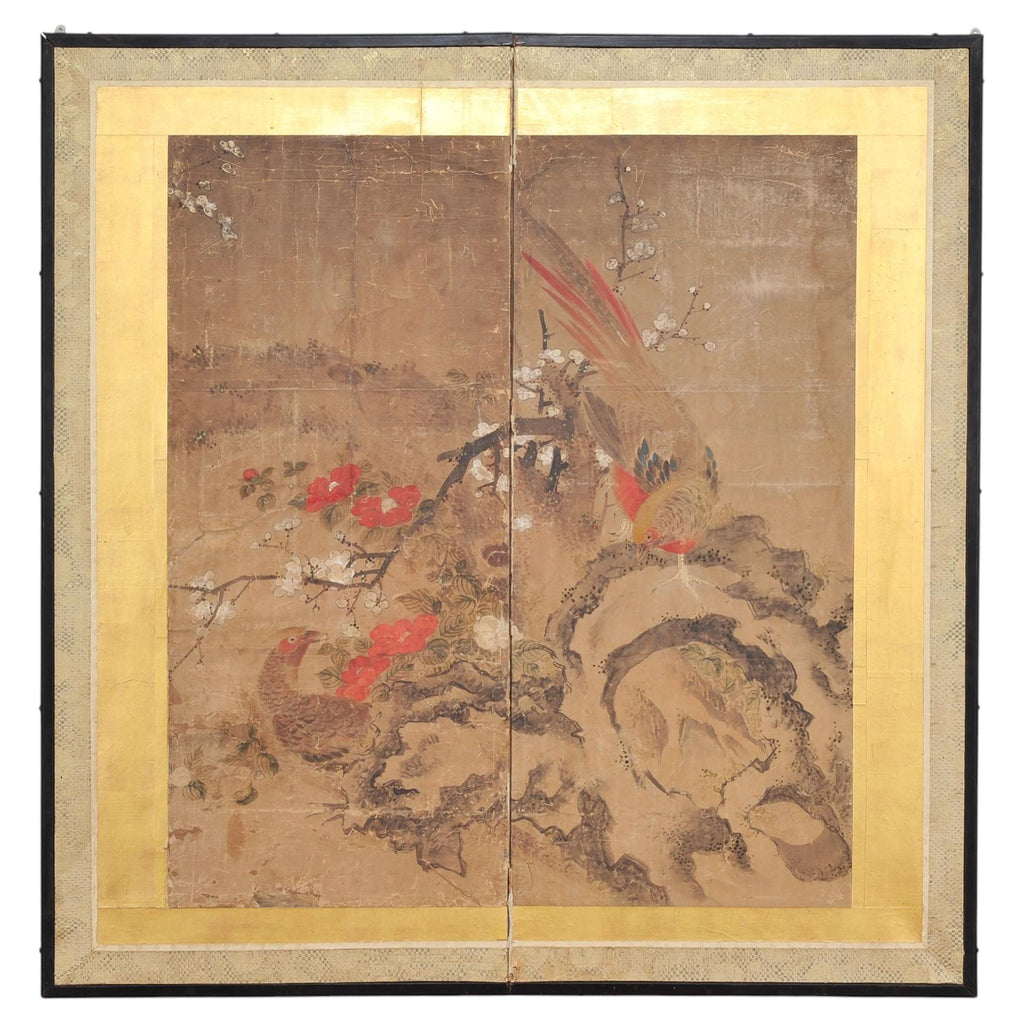
An evocative Japanese Edo period two-panel folding byobu screen depicting a pair of pheasants in a late winter or early spring landscape, surrounded by flowering plum (prunus) and vibrant red camellias. Delicate blossoms and richly colored flowers bring warmth to the composition, capturing the transition between seasons. The distinctive painting appears to be a fragment of a larger painting.
Executed in ink and natural color pigments on paper, the painting is mounted in a latter black lacquered wood frame bordered by squares of gold leaf and silk brocade. Textured passages and finely dotted brushwork lend depth and character to the landscape, while the gold introduces a soft luminosity behind the natural forms.
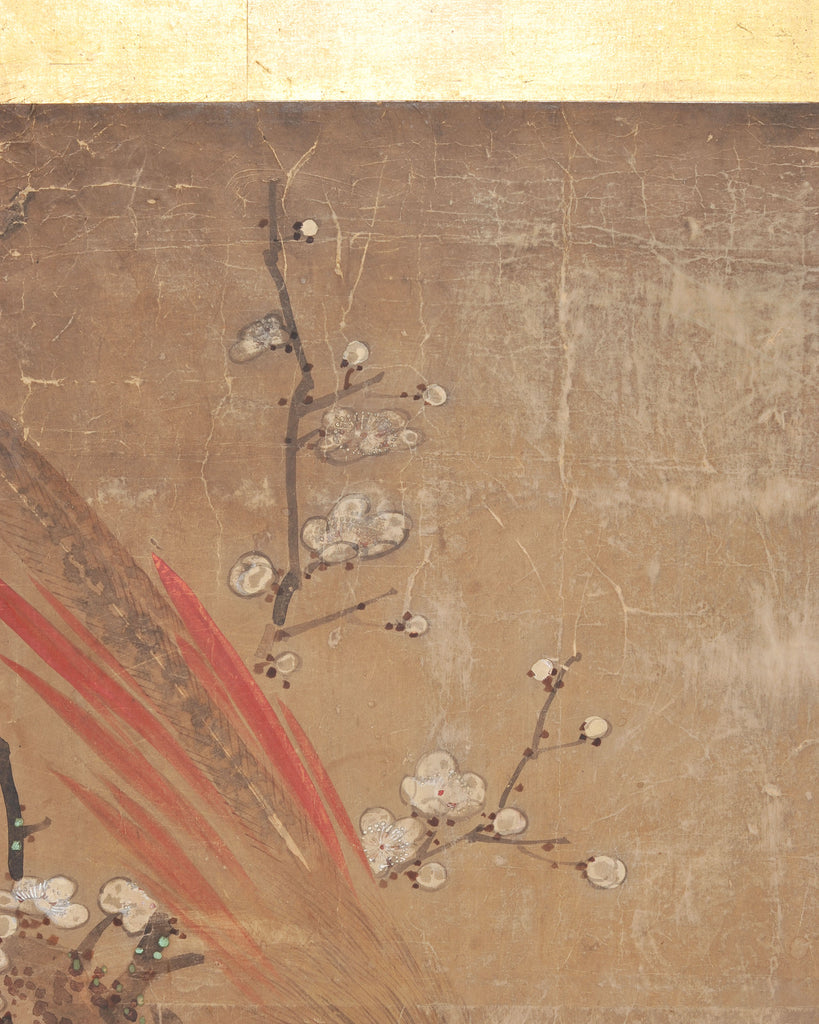
The unsigned painting is attributed to the Unkoku school and is believed to date to the 17th or 18th century, within Japan’s Edo period (1615–1868). Its distinctive use of texture strokes and dotted brushwork informs this attribution. The composition appears to be a surviving fragment of a larger work, presented in its current two-panel format. No artist signature present. The painting had an authentic aged patina with a visibly distressed finish on the paper as seen in photos adding to its character and intrigue.
A compelling antique painting with a richly aged surface, the screen offers an intimate view of Japanese bird-and-flower painting, balancing the presence of the pheasants with the delicacy of the surrounding blooms. From an estate in San Francisco, CA.
Dimensions: 47.75"w x .75"d x 49.5"h
Circa: 18th Century, Japan
Materials: Gold Leaf, Paper, Silk, Wood
Condition: Distressed, minor wear consistent with age and use. Beautifully crafted with a distressed patina as seen in photos. Age appropriate wear with scuffs, scratches, age cracks, losses, stains, and old repairs. The painting appears to be a surviving fragment of a larger work.


